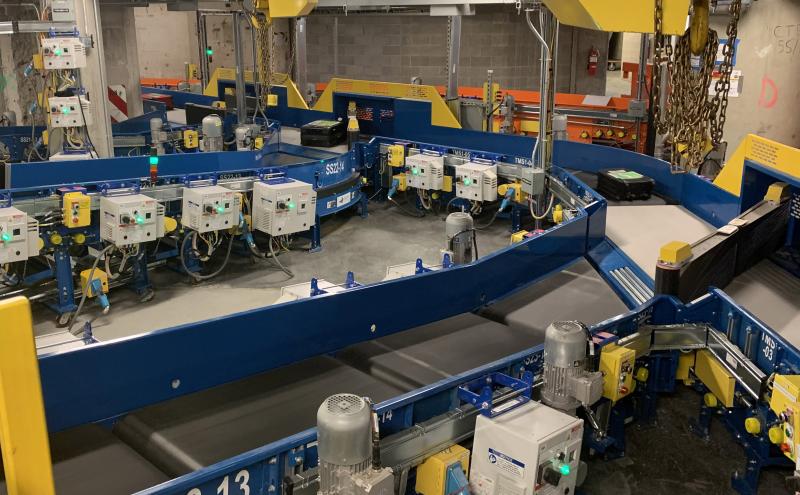
The plant floor is on the internet. We engineered for it.
BlackHawk Data's OT Cybersecurity Practice secures the networks, identities, and operations that run industrial and critical-infrastructure environments. A four-phase program, anchored in IEC 62443, NIST SP 800-82 Rev. 3, NIST CSF 2.0, and the Purdue Reference Model - delivered as engineering, not slideware.
2-page brief · 4 minute read
The problem in one paragraph
The myth of the air-gapped plant is dead. Convergence is not a future state - it is an existing condition discovered, often to the surprise of leadership, through historian replication, ERP/MES integration, OEM remote support, contractor laptops, and cellular modems on PLCs. Most industrial estates we assess have 30-60% more OT-connected assets than the CMDB knows about, three to eight undocumented remote-access pathways per site, and at least one Level-2 device exposed to corporate IT without an enforcing firewall between them.
A four-phase program, sequenced for production
Discovery & Assessment
Establish ground truth: assets, architecture, exposure, and risk. Mostly passive.
Standardization & Governance
OT policies, target Purdue architecture, IT/OT RACI, IR plan, configuration baselines.
Secure Architecture & Implementation
Segmentation, iDMZ, secure remote access, identity, endpoint, resilience, sensors.
Operational Security Monitoring
24x7 OT SOC. Threat hunting. Continuous vulnerability management. QBR cadence.
What changes when the program is in place
MFA on every human and service account accessing OT
unmanaged remote-access pathways, sustained
of OT-resident assets reconciled to inventory
monitored production environment with ICS-native detection
The metric that matters most
Time between observing a suspicious event in the OT estate and an engineer-validated response action taken at the affected site. That metric, more than any other, distinguishes a program that exists on paper from one that operates in production.
What we will not do
We will not run active scans against Level 1 or 2 OT devices without engineering sign-off. We will not deploy endpoint agents onto safety-instrumented systems. We will not bridge segmentation we have engineered for client convenience. The first “no” is sometimes the most valuable thing a partner can offer.
Three coverage tiers - modular by design
Most clients do not consume every BlackHawk service from day one. Coverage typically expands across the program - beginning with assessment and advisory, broadening through detection and response during Phase 3, and reaching full operational coverage by the end of Phase 4 onboarding.
Essentials
- SOC
- Business hours
- Visibility
- Quarterly inventory
- IR retainer
- On-call (T+4)
- Vuln mgmt
- Monthly report
- OT-CISO
- Quarterly review
- Tabletop
- Annual
Advanced
- SOC
- 24x7x365
- Visibility
- Monthly + feed
- IR retainer
- Named team (T+1)
- Vuln mgmt
- Weekly + advisories
- OT-CISO
- Monthly engagement
- Tabletop
- Annual + 2 functional
Enterprise
- SOC
- 24x7 dedicated POD
- Visibility
- Real-time
- IR retainer
- Embedded on-site
- Vuln mgmt
- Remediation engineering
- OT-CISO
- Fractional or embedded
- Tabletop
- Continuous calendar
Why BlackHawk Data
A specialized OT team built across two decades of industrial networking engagements.
A U.S. industry first - held alongside engineering depth across every leading OT platform.
The analyst who discovers your environment becomes the SOC incident commander.
Engineering or industrial-controls backgrounds in addition to security certifications.
Engagement model
Schedule a working session with BlackHawk OT practice leadership.
One conversation with your CISO, head of operations or engineering, and program sponsor. Within ten business days you receive a fixed-fee Phase 1 diagnostic proposal and a written point of view on the highest-priority risks specific to your environment.