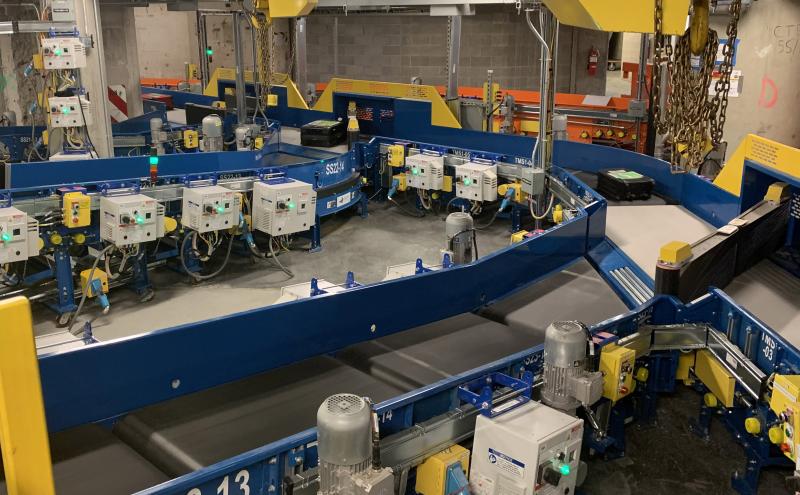
The plant floor is on the internet. We've already engineered for it.
Industrial control systems were built for isolation. They live in convergence. BlackHawk's OT Cybersecurity Practice secures the networks, identities, and operations that run critical infrastructure - through a four-phase program anchored in IEC 62443, NIST SP 800-82 Rev. 3, NIST CSF 2.0, and the Purdue Reference Model.
The program at a glance
- 01Discovery & AssessmentEstablish ground truth: assets, architecture, exposure, and risk.
- 02Standardization & GovernanceCodify policies, reference architecture, and the IT/OT operating model.
- 03Secure Architecture & ImplementationEngineer segmentation, identity, remote access, and resilience.
- 04Operational Security Monitoring24x7x365 OT SOC. Run a continuously assured environment.
Operational Technology is the soft underbelly of the modern enterprise.
For three decades, industrial control systems ran on the assumption that physical isolation and protocol obscurity were sufficient defense. That assumption is no longer defensible. The blast radius is no longer just data - it is production output, public safety, and environmental compliance.
Ransomware operators
Modern crews - Royal, Akira, Play, RansomHub, ALPHV variants - explicitly target OT-adjacent IT because production downtime is the most reliable leverage for payment. The 2021 pipeline shutdown did not require touching the SCADA system; operators shut OT down preemptively to protect safety.
IT compromise drives OT shutdown. Segmentation alone is not enough - IT must be trustworthy.
Nation-state pre-positioning
VOLTZITE, ELECTRUM, KAMACITE, CHERNOVITE, and the cluster behind PIPEDREAM have demonstrated capability against Modbus, OPC UA, CODESYS, and S7. Geopolitical posture has shifted these actors from collection to pre-positioning for disruption. Water, energy, transportation, and manufacturing are the named targets.
Quiet, long-dwell intrusions intended for future disruption. Only OT-aware monitoring sees them.
Insider & third-party access
The most consistent root cause we observe in OT incidents is not a sophisticated zero-day. It is an integrator, OEM, or contractor with persistent unmonitored remote access - often via a single shared credential or a TeamViewer install nobody can recall authorizing.
Unmanaged remote-access pathways are the single most common OT entry point. Solvable in Phase 3.
Regulators & underwriters
TSA Security Directives. EPA assessment requirements. NERC CIP. NIS2. SEC disclosure rules. Cyber insurance carriers refusing renewals on industrial operators without documented OT segmentation, MFA, and monitoring. Voluntary guidance has become enforceable directive.
The roadmap that answers regulators is the same roadmap that satisfies underwriters.
3-8 undocumented remote-access pathways per site · 30-60% assets hidden from CMDB · Level-2 exposure to corporate IT
IT inverts the OT triad. Securing one with the other's playbook is how programs fail.
Information technology is built around C-I-A - confidentiality first. Operational technology inverts that ordering. A control system that loses availability for ninety seconds can spoil a production batch worth seven figures. Confidentiality is often the least relevant dimension.
- ConfidentialityProtect data first; everything else follows.
- IntegrityData must not be tampered with in transit or at rest.
- AvailabilitySystems should be reachable; downtime is recoverable.
- SafetyA logic controller can vent toxic chemicals or mis-route a train.
- Availability90 seconds of downtime spoils a production batch worth seven figures.
- IntegrityTampered process logic is more dangerous than tampered data.
- ConfidentialityOften the least relevant dimension in OT.
“Patches cannot be applied during business hours. Endpoint agents cannot be deployed onto a 12-year-old engineering workstation. Active vulnerability scanning will brick a PLC running Modbus TCP. OT must be secured around its constraints - not in spite of them.”
Four sequenced phases. Engineered for production schedules - not consulting calendars.
Every meaningful OT program begins with answering four deceptively simple questions: what do we own, where does it live, what talks to what, and what's our exposure? Few industrial operators can answer all four with confidence. The phases below close that gap.
Discover
Discovery & Assessment
- Passive asset & protocol discovery
- Engineering walkdowns at representative sites
- Data-flow & Purdue-model overlay
- Risk & maturity baseline (NIST CSF 2.0 / IEC 62443)
- Crown-jewel & MITRE ATT&CK for ICS modeling
Standardize
Standardization & Governance
- OT-specific security policy & IT/OT RACI
- Target-state Purdue reference architecture
- iDMZ design, zone & conduit catalog
- Approved-products list, configuration baselines
- OT incident response plan & playbooks
Engineer
Secure Architecture & Implementation
- Industrial firewalls at every Purdue boundary
- iDMZ build-out, broker-based historian replication
- Secure remote access - Cyolo / xDome / Dispel / Xona
- MFA, session brokering, PAM for OEM accounts
- OT-tolerant EDR, offline backups, sensor deployment
Operate
Operational Security Monitoring
- 24x7 OT SOC - analysts with ICS backgrounds
- MITRE ATT&CK for ICS detection content
- Behavioral baselining & threat hunting
- Continuous vulnerability & compensating-control management
- Monthly ops · quarterly QBR · annual board review
Continuity is a design choice. The discovery analyst becomes the standardization architect becomes the implementation lead becomes the SOC incident commander. The Virtual OT-CISO who first meets your CISO is the same person who presents to your board two years later.
What we will - and will not - do.
We treat the OT program as an engineering discipline, not a compliance exercise. These five principles govern every design decision and every operational call. The first “no” is sometimes the most valuable thing a partner can offer.
Safety and uptime are non-negotiable
Every control is evaluated against process safety and production availability before its security benefit is weighed. Passive before active. Advisory before blocking.
Visibility before action
You cannot defend what you cannot see. Passive discovery typically yields a 30-60% increase in known asset count in six weeks. Until visibility is established, prioritization is guesswork.
Segmentation is the highest-leverage control
If we could only deploy one control, it would be properly engineered network segmentation. Detection without segmentation is monitoring a fire as it spreads.
Identity is the new perimeter - including machines
Every human and machine identity is vaulted, rotated, monitored, and revoked. Including OEM service accounts, jump hosts, historian replication, and PLC project-file credentials.
The program must outlive the project
A consulting engagement that produces a binder and disappears is worse than no engagement at all. We transition into a managed operating state with named owners and QBRs.
What we will not do. Run active vulnerability scans against Level 1 or 2 OT devices without explicit engineering sign-off. Deploy endpoint agents onto safety-instrumented systems. Bridge segmentation we have engineered for client convenience.

Every substation, every conveyor line, every PLC cabinet — someone's plugged a laptop into it this week.
Integrators, OEM service techs, contractors with persistent unmonitored remote access. This is where most OT incidents actually start — not in a sophisticated zero-day, but at a cabinet exactly like this one. BlackHawk's OT program closes that pathway in Phase 3.
pathways per site
vs. existing CMDB
Not a proprietary methodology. A delivery model your auditors already understand.
BlackHawk's OT program operationalizes the leading public frameworks so clients can speak in the language regulators, insurers, and board committees already use. We anchor design decisions to standards and measure delivery by their controls - not by our slideware.
Detection: Claroty · Dragos · Nozomi · Armis · Networking & segmentation: Fortinet OT · Cisco IND/Cyber Vision · Palo Alto · Tenable OT · Secure remote access: Cyolo · Dispel · Xona · Claroty xDome SRA
What "done" looks like at the end of secure-architecture implementation.
Phase 3 is the longest and most capital-intensive phase. We sequence it around production schedules and planned outages, not the consulting calendar. By the time it closes, the client is no longer in a defensive crouch - they are in an operating posture.
Engineered Purdue boundaries
Industrial firewalls at every Level 5-4, Level 4-3.5 (iDMZ), and intra-Level-3 functional zone.
Brokered remote access only
No human or vendor accesses OT without MFA and recorded, just-in-time session brokering.
Hardened workstations
Application allowlisting, OT-tolerant EDR, role-based access. Advisory before enforcement.
Offline, tested backups
PLC projects, HMI configs, historian DBs on media unreachable by ransomware. Recovery exercised.
PAM & vaulted identities
Credential vaulting and rotation extended into OT to the degree the equipment supports.
OT detection sensors tuned
SPAN/TAP at iDMZ uplinks and Level 2 aggregation, with 30-60 day behavioral baseline.
Out-of-band management
Security infrastructure does not depend on the production network it protects.
Exercised IR playbooks
Five highest-likelihood OT scenarios documented, walked through, and lessons fed back to runbooks.
Three coverage tiers. Modular by design. Expand as the program matures.
Most clients do not consume every BlackHawk service from day one. Coverage typically begins with assessment and advisory, broadens through detection and response during Phase 3, and reaches full operational coverage by the end of Phase 4 onboarding.
Essentials
Operators with internal OT engineering capability who need a structured visibility and advisory layer.
- OT SOC monitoring
- Business hours coverage with on-call escalation.
- Asset & vuln visibility
- Quarterly inventory refresh; monthly advisory report.
- IR retainer
- On-call team, T+4-hour response. Annual tabletop.
- OT-CISO advisory
- Quarterly governance review.
Advanced
Operators with multi-site OT footprint, active regulatory exposure, and the need for 24x7 detection.
- OT SOC monitoring
- 24x7x365 with named Tier 1-3 analysts. ICS-specific runbooks.
- Asset & vuln visibility
- Monthly + continuous feed. Patch advisory with change windows.
- IR retainer & tabletops
- Named team, T+1-hour. Annual + 2 functional exercises.
- OT-CISO advisory
- Monthly engagement. Quarterly business review.
- Service-level
- 15-min critical ack30-min analyst response1-hour exec notification
Enterprise
Large industrial enterprises with critical-infrastructure exposure and continuous regulator and board scrutiny.
- OT SOC monitoring
- 24x7 with dedicated POD. Continuous sector-specific threat hunting.
- Asset & vuln visibility
- Real-time inventory; remediation engineering bundled.
- IR retainer & tabletops
- Embedded on-site capability. Continuous exercise calendar.
- OT-CISO advisory
- Fractional or fully embedded. Board briefings on demand.
Integration with your existing capability. BlackHawk is not exclusive. We routinely operate alongside the client's IT SOC, IR firm, and internal security team. Shared ticketing, shared incident-commander structure during cross-domain incidents, shared executive reporting - the boundary is documented in writing.
Twenty years of OT networking expertise. The first certified Fortinet OT partner in the U.S.
Our OT practice is not a rebadged IT security team. Our assessors, engineers, and SOC analysts hold backgrounds in process control, electrical engineering, industrial networking, and plant operations - in addition to security certifications. We hire from the floor as well as the SOC.
A specialized OT team, anchored by a U.S. industry first.
BlackHawk Data was the first certified Fortinet OT partner in the United States - a designation we hold alongside engineering certification across the leading detection, segmentation, secure-remote-access, and identity platforms used in industrial environments. Vendor selection is made for the client's environment, not for ours.
OT-native staffing
Process-control, electrical engineering, industrial networking, and plant-operations backgrounds - alongside security certifications. We hire from the floor as well as the SOC.
The analyst paging you at 3 a.m. has run a real PLC. They will not ask you to reboot a safety-instrumented system.
Vendor-agnostic, deep partner depth
Current engineering certification across every leading OT platform - detection, segmentation, secure remote access, identity, SIEM, and EDR. We select for your environment, not for ours.
Phase 1 selects the right detection platform during the engagement - not before you sign.
Continuity from assessment to operation
The discovery analyst becomes the implementation lead becomes the SOC incident commander. The Virtual OT-CISO who first meets your CISO is the same person who presents to your board two years later.
No re-introductions, no re-discovery, no lost context. Long-tenured clients tell us this is the single most consistent piece of feedback they give.
Operational discipline as an MSSP
BlackHawk's roots are in operating production infrastructure across hundreds of sites. The OT service inherits the same discipline: documented runbooks, named on-call rotations, audited service quality.
You are not the first thing we have operated 24x7. The muscle is already there.
Schedule a working session with BlackHawk OT practice leadership.
One conversation with your CISO, head of operations or engineering, and program sponsor. We test fit, scope a focused Phase 1 diagnostic, and - within ten business days - return a fixed-fee proposal and a written point of view on the highest-priority risks specific to your environment.
Working session, 60-90 minutes
CISO, head of operations or engineering, program sponsor. We test fit and scope a Phase 1 pilot. No commitment.
Point of view in 10 business days
A written POV on the highest-priority risks in your environment, plus a fixed-fee Phase 1 diagnostic proposal.
Phase 1 diagnostic, single quarter
Mostly passive. 30-60% more known assets. A prioritized roadmap and board-ready executive read-out.
- Working session
- 60-90 min · no commitment
- POV turnaround
- 10 business days
- Phase 1 duration
- 8-14 weeks · single quarter
- NOC / SOC
- 24x7x365
Questions we get every time
How is OT cybersecurity different from IT cybersecurity?
The priorities invert. IT security optimizes for confidentiality and patches aggressively; OT security optimizes for availability and safety, on equipment that may not tolerate a reboot, a scan or an agent. Control systems often run operating systems well past end of support with no maintenance window to remediate them. BlackHawk Data treats OT as its own discipline mapped to IEC 62443 and NIST SP 800-82, not as an extension of the IT firewall estate.
Will assessing our OT network disrupt production?
No. BlackHawk Data collects passively. A span port or network tap copies traffic to a collector that never transmits onto the OT network, so there is no active scanning, no device polling, no protocol fuzzing and no agents installed on control systems. Where an environment cannot accommodate a span port, the work proceeds from configuration exports and engineer interviews instead.
What are IEC 62443 zones and conduits?
IEC 62443 models an industrial environment as zones - groupings of assets with a shared security level requirement - connected by conduits, the controlled pathways between them. Segmenting to that model limits how far an intrusion can move rather than relying on a single perimeter. BlackHawk Data produces the zone and conduit map as a deliverable and designs segmentation against it.
Can BlackHawk Data help with NERC CIP or TSA security directive compliance?
Yes. BlackHawk Data aligns OT security programs to NERC CIP for electric utilities and to the TSA security directives applying to pipeline and rail operators, alongside the broader IEC 62443 and NIST SP 800-82 frameworks. Findings are mapped to the control the auditor will actually ask about, which is what makes remediation work defensible at audit.
Do you monitor OT environments around the clock?
Yes. BlackHawk Data operates a 24x7 OT security operations center staffed by engineers with hands-on PLC, SCADA and historian experience. That distinction matters in OT: an analyst who has never commissioned a control system cannot reliably separate an attack from a legitimate maintenance action, and false escalations to a plant floor carry real operational cost.
Where should an organization start if its OT environment has never been assessed?
Start with an asset inventory, because every other control depends on knowing what is actually connected. BlackHawk Data offers a complimentary OT risk assessment covering one representative site or cell, which produces a passive asset inventory, an IEC 62443 zone and conduit map, a NIST 800-82 gap analysis and a prioritized remediation roadmap. The documents are the client’s to keep regardless of what follows.